
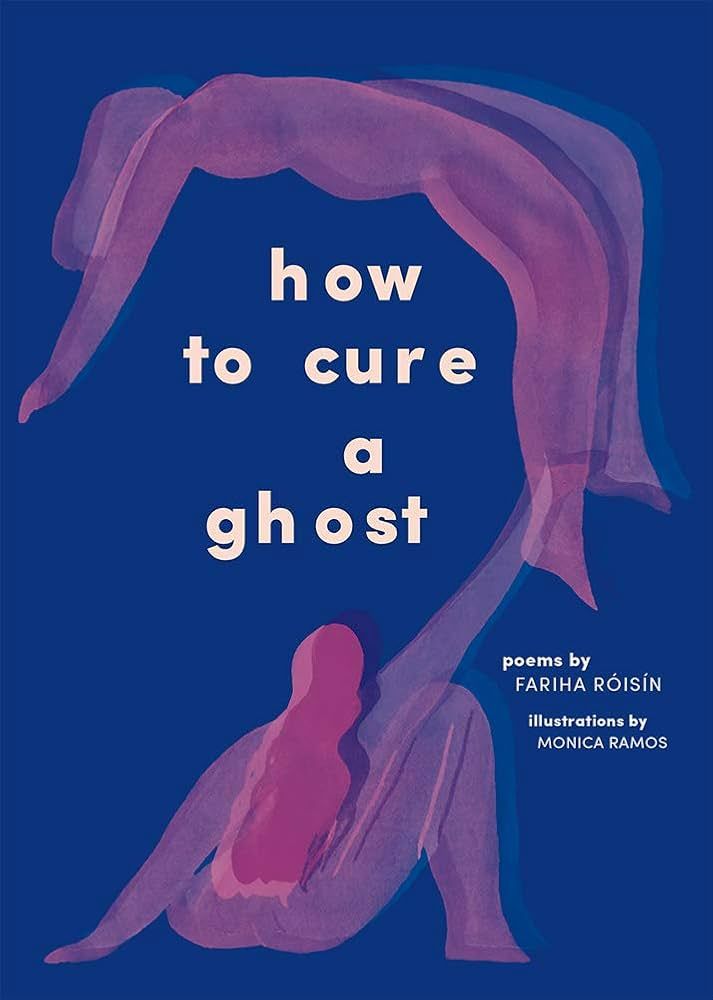
Fariha Róisín’s debut book of poetry, How to Cure a Ghost, is a classic example of how Walt Whitman’s free-spirited form of prose and Charles Bukowski’s unapologetic unconformity of lacking grammar, proper line breaks, and capitalized personal pronouns completely decimated what people consider “expressive” contemporary poetry these days.
Every poet, including myself, started out with a carefree heart, trying to spill our guts out on our digital canvasses, relishing in our creative use of indents and epic-length run on sentences that must have mattered to someone, most likely a friend of the opposite sex, or a muse of sorts.
It’s clear Róisín is a beginning poet, sharing these same character traits in her writing, who undoubtedly is proud to have her work published and bound in a pretty nifty paperback
And what a book it is!
With vibrant use of pastel blue and pink it’s clear the aesthetics are meant to be flowery and spiritual, a psychological exploration of the obvious hurt and healing our now world famous poet has gone through. It’s all so calculated and poetry workshop approved, most likely led by untalented instructors who regurgitate the same eye-rolling and groan-inducing clichés that everyone else seems to cling to for life!
The rules are as follows;
1: To break the rules, you must know the rules!
2: Avoid clichés!
3: No rhyming!
The rules usually stop here by the way…
…
But can we be honest: Why is so much contemporary poetry written with awkward line breaks that read like William Shatner trying to sound dramatic as Captain Kirk on the original Star Trek series that aired during the late 1960s? Do these poets ever read aloud their employment of faux-dramatism and not want to crack up and laugh at how stupid their writing sounds? Are they even aware of this at all?
And if we’re being honest, do these poets even enjoy classical English poetry at all? Or is the past meant to be forgotten, and the present mere imitation of other workshop approved poets who employ all of the same supposed “tricks of the trade”?
I am hard to please as a reader and I owe much of my harshness to spiritual mentors such as film critic Pauline Kael, poet and art analyst Dan Schneider over at Cosmetica, and even Lucifer himself. Harsh, yes, but I am still kind hearted. Róisín has skill, and a creative expressiveness with the English language, but her themes of hurt and self identity are such a trope with female written poetry. Adventures aren’t just for boys, and these girls need one!
…
Yes, Whitman and Bukowski’s poetry was often driven by length and an upsetting lack of use of stanzas, but Whitman was also trying to capture the free-spiritedness of the Western frontier during the days leading up to the Civil War, while Bukowski was a drunken rebel.
Fariha Róisín, on the other hand, is a mere imitator trying to win the approval of talentless hacks who are proud to declare themselves poets, who often thrive off disingenous hagiography from other untalented hacks calling themselves “poets”. Her book is pretty, however, and thick! It feels important. It sounds important.
I’m just not sure if it’s any good…
 The Verse Universe