Crying while hoping for poetry in Almost Home, a book by Madisen Kuhn

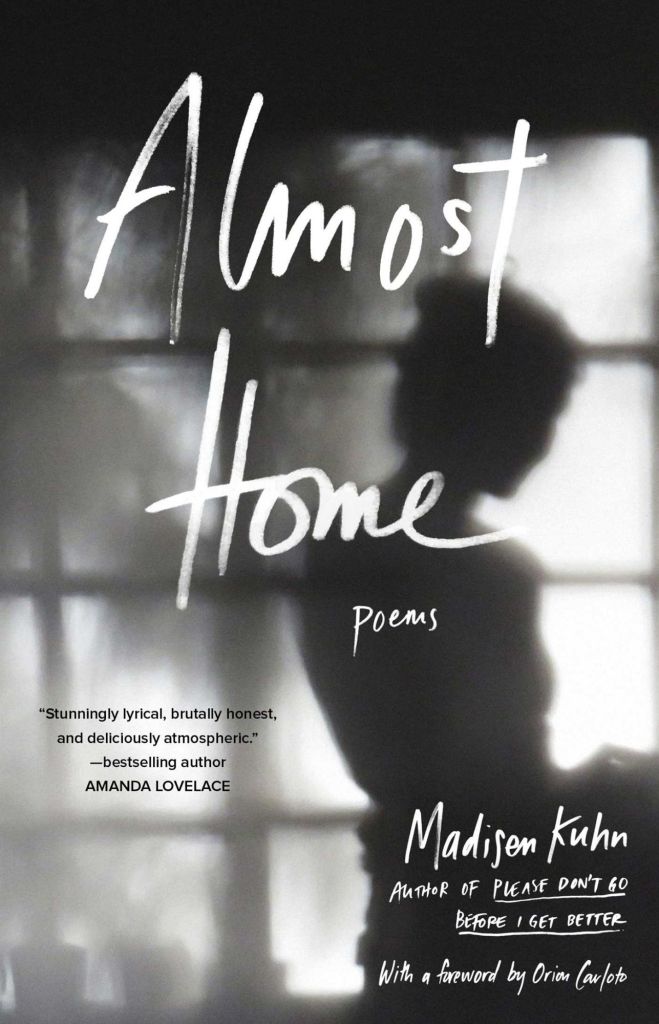
The cover, baby …

Christ, I’m in a bad mood, and here is a book I purchased from a Goodwill full of narrow lines and one word bars. Please William Shatner, read this poetry for us…

I jest, but Christ, is every contemporary poet a fan of Charles Bukowski? Uncapitalized first person pronouns, lack of grammar, and diarrhea of thoughts that always narcissistically revolve around the first person introspection. The thing about these people’s prose isn’t that they are not profound or deep, but rather they are not poetry. Bukowski was an admittedly terrible writer who wrote prose in the shadows of I guess poetic structures, once in a blue moon achieving greatness, but more often not, much like how author Madisen Kuhn does here. But these are thoughts eyeballed with a computer keyboard to be narrow, and as always, just prose broken up into short lines. As always, there’s sloppy enjambment and no real voice here but I guess lines with one word are important.

Always

So

Important

🤮 What’s clear about these contemporary poets is how little most of them read through the history of what really is a rich history of wonderful writers who fell in love with the English language and all it could express. Madisen Kuhn doesn’t possess this affection, rather finding pleasure in thoughts and the very occasional doodle–ideas that maybe would work better as paragraphs, but honestly who cares? They have an MFA! They know what it’s like to be homeless!

Please wake me up when they write details about sleeping on concrete and eating cheeseburgers out of garbage cans. Of having to lay on a dirty mattress in a room full of loud and noisy strangers. Of having to crawl through shit and mud to find release. I don’t think Madisen Kuhn has been thru these scenarios, and while I am judging her work by her lack of discipline or convention, I honestly wouldn’t know. She doesn’t provide context or details about what she went through but her book looks acceptable!

A user on AllPoetry once told me that some of the best poems are found in badly written poetry but I personally find that defense a cop out. It takes a few minutes to write a very easy haiku and maybe more time to write a lymeric or sonnet. These are easy forms that can be mastered quickly, and used as exercises to shape what are ideas in sentence form into actual poetic expressions–hopefully with brevity and succinctness.

Beginner poets often feel a need to plant some sort of flag in the sand, usually wanting to impart a feeling or emotion that feels as IMPORTANT and PROFOUND, usually in a form that is monstrously long narrow strips of sentences that don’t have any line breaks or developed stanzas. Instead of developing technique, they build a body of work that is shallow and exuberant. It really isn’t their fault, as every beginner poet does this, but it’s especially egregious when they publish a book with Simon & Schuster stamped on the cover.

The advertising states that Almost Home is reminiscent of Milk and Honey by Rupi Kaur, but I disagree. This is clearly inspired by Bukowski and honestly, other contemporary hacks who think they have what it takes to be remembered in, say, more than a few years.

I wish I could write something positive about Kuhn’s work in her paragraphs but honestly, the prose inside this book isn’t worth the time it takes to do so on my smartphone. This collection is merely acceptable poetry and embarrassing work for a MFA grad who was taught to get approval by other beginner poets in writing workshops!

🤮
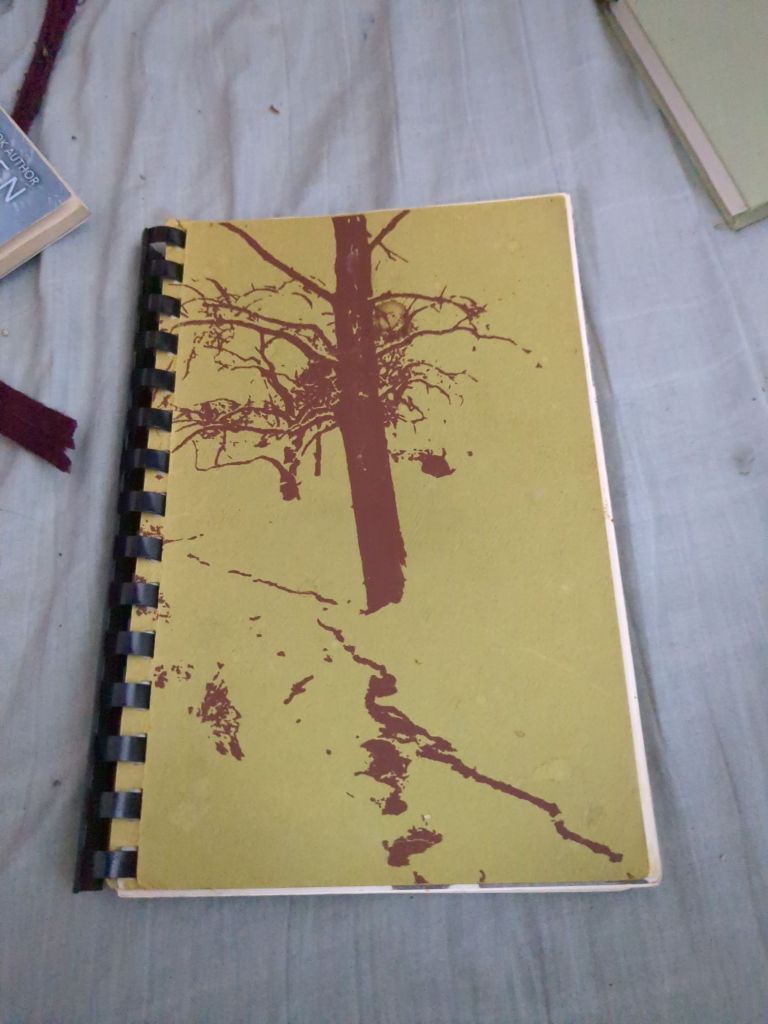
indeed… and very dearly – A Book of Reflections by the Franciscan Sisters of Tiffin, Ohio (chapbook, 1973)

cover of indeed… very dearly

The history of poetry, and all of human writing, doesn’t exist in established publishing houses or clever marketing departments. Most poetry we read was never intended to even see the light of day, with Robert Greene and Emily Dickinson being the most obvious examples of writers who never found much fame or fortune during their own lifetime.

Title page

Writers live a lonely life, usually doing so out of passion and necessity more than anything else. The very idea of making a living from writing, and even poetry, is quite a new concept. Edgar Allan Poe is an early go-to example of an author who solely made his living by his words, with perhaps William Shakespeare and maybe Sir, Arthur Conan Doyle being the others. In the 21st century, the idea of wanting an income for prose and verse alone still is a far off prayer for many, with most people resorting to day jobs or government assistance just to get by.

I bring all of this up not to excuse what is essentially a chapbook of poetry printed for friends and the general public by the Franciscan Sisters of Tiffin, Ohio, but to celebrate how intimate and unknown such a find is. The book was gifted to me by my mother, who is not a nun, but a member of the Franciscan cloister. She is intimate with many of these poets and was happy to share their book of reflections, published in January, 1973. The book was printed by the Cloister Printery in New Riegel, Ohio.

Copyright information

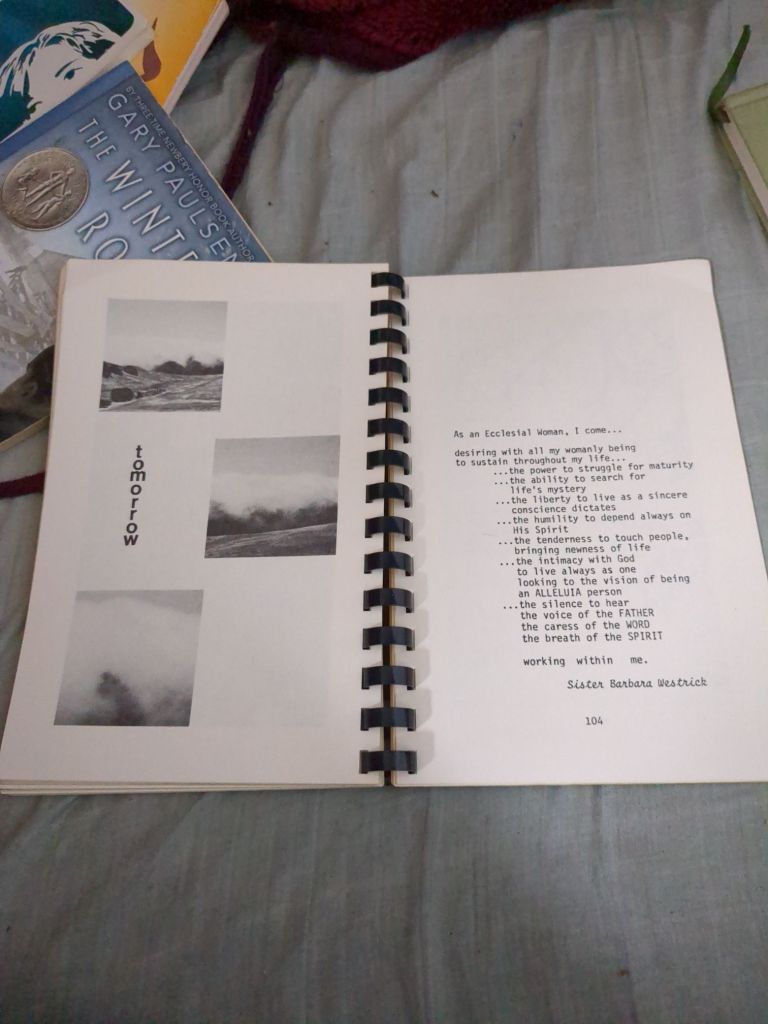
Reviewing this book of poetry would not be much use, and quite frankly a little insulting. I don’t think the Tiffin Franciscan Sisters had high ambitions for this anthology, with contributions by various sisters, but rather wanted to create a historical document of where they were all at in their religious beliefs and attitudes.

That really is the purpose of this post, more to document this chapbook for historical purposes, more than anything else. I wouldn’t say the poetry inside is anything innovative or life-affirming. The writing inside are religious poems that I do happen to agree with, and find strength in, but hardly anything truly emotional besides perseverance and strength, and nothing metaphysical to tickle the intellect.

An example of a reflection

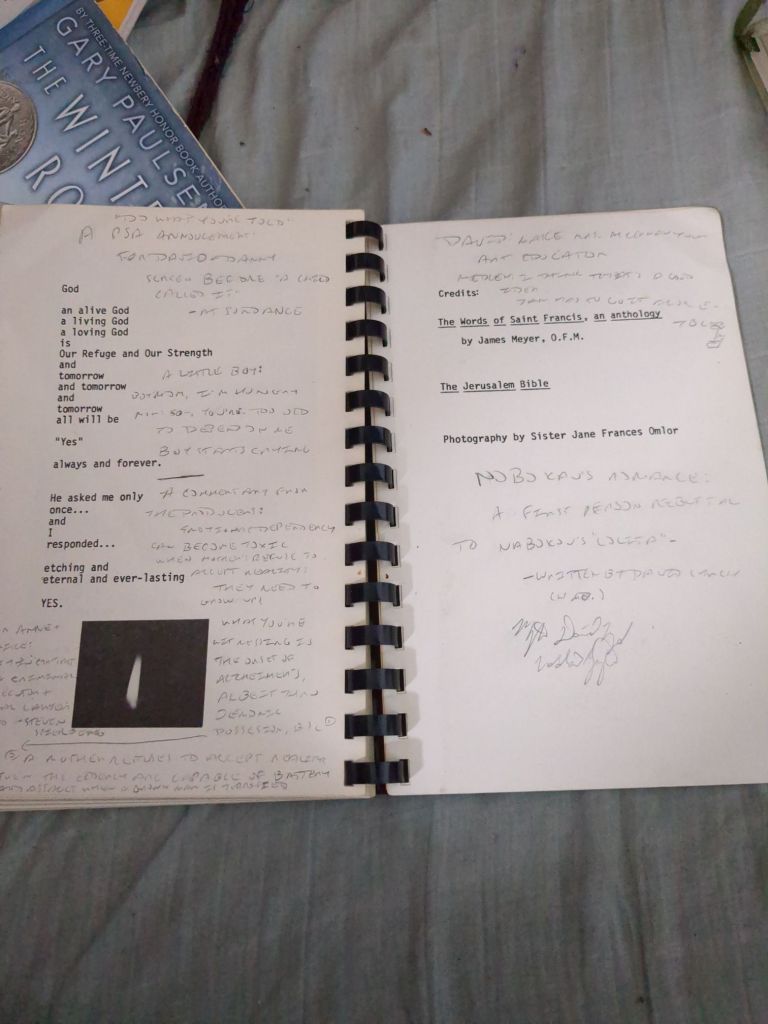
As can be seen above, I took copious amounts of notes in the borders of the book, perhaps sacrilegious to some, but something I happen to do from time to time. If marking on a supposed sacred book offends, I have no words to offer. I don’t apologize and I don’t plan on changing my ways anytime soon.

Nonetheless, this was a book gifted to me and I did find the poems inside rather affirming of my own Islamic religious attitudes. As we mature as writers and lose a lot of our hefty ambition, hopefully to prayers to be put off for the glory of Yaweh to fulfill, I do find joy in becoming more aware of our own place in the often humbling history of a form of writing few people truly appreciate. Part of that humility lies in stripping away a lot of the mysticism behind the published poet, especially the dead ones, and understanding just how small snowstorms are when they begin. With just one flake of snow, such as a single poem by a nun, a storm slowly gathers. Seeing a book published in the 1970s without all the glitz and glam of most publishing houses, creates a sense of intimacy and care that most poets simply have never experienced.

There is no need for vain efforts to be accepted and validated by the opinions of others. The fact that this book exists at all is proof enough of how powerful a gathering of beliefs can be. Often the most important books are not found in libraries and bound volumes of what are essentially greatest hits of poems, but more interesting and curious historical artifacts, such as this chapbook is.

A page from the chapbook

I’m not sure how many copies of this book actually exist or how my mother was able to attain it. I do know that you won’t find any information about it online, at least until now, and that most copies, if ever found, are usually in estate sales of deceased elderly people and the book bins of a local Goodwill or other thrift shop.

But reading these religious reflections and prayers, shaped into often creative poetical structures, is a joy few will know. I often find the best books of poetry and other literature in the dung piles of other’s discarded life collections, usually getting my ears wet in looking for books that seemingly have no monetary value, unless you actually understand the patience involved in historical reselling and creating a market for a publication such as this chapbook.

Another page…

Not that I would resell this book, nor keep it in a personal library even. I don’t believe in personal possessions, having lost a lifetime worth of collections at least four times now through apartment evictions and manic abandonment. A wise man named Yeshua once said to put our treasures in heaven and not in the material world, and to be honest, I find that to be all the more true the older I get. It’s in our memories and emotions that such celebrations of faith are found and retrieved, and for some, even recreated.

Not that this book won’t be preserved. I plan to leave it in a local library, where the rule is to leave a book and take a book. Hopefully someone else will find joy in the affirmations presented here and perhaps relive the memories of the sisters who took the time and care to craft such a intimate gem of joy and history. I know it touched my own heart and memory.

Closing pages

An analysis of the poem ‘Let My People Go’, by James Weldon Johnson

image generated with the help of ChatGPT

James Weldon Johnson is a simple poet, delivering bars in clean lines and succinct stanzas. Much of his religious poetry is long and epic in scale, but his message of freedom and suffering is universal in its scope.

A black man living in a post-slavery society, Johnson was more of a preacher delivering sermons than a poet’s poet–this much is obvious. But his ballads, or sermons for some, do carry the weight of the burden and tragedy that black people felt while building this country from the ground up, a sentiment shared by the Jews enslaved in Egypt. With this obvious allusion, one of Johnson’s most visionary poems was his ballad, “Let My People Go”,–a retelling of the story of the Exodus from the Torah that showcases the power of Yaweh freeing his people who were enduring unbearable hardships in the face of fascism and authoritarianism.

Like the Jews, the American Negroes were going through their own escape from the bondages of the centuries long slave trade. Having been offered an education, many black Americans found relief from this plight through the arts; poetry, music, literature, paintings, sculptures–there is no denying the impression of struggle any more obviously than the creativity of descendants of former slaves still dealing with a conservative and bigoted country.

In our analysis of the poem ‘Let My People Go’, by James Weldon Johnson, we’ll focus less on his poetic technique and more on the basic narrative being retold through what essentially is a sermon for a choir. The strength in Johnson’s words isn’t so much his innovation as it is his remix-like ability to put a new skin on what are essentially ageless parables describing the human condition. Johnson doesn’t seem too concerned with being called a poet so much as he is about delivering a message and making his people’s emotions felt. In borrowing literature from the Jewish people’s own struggles, he reshapes traditional Biblical narratives into a modern contextualization of the plight of the African American. Reading a poem  like “Let My People Go” might seem an almost eye-rolling and obvious use of allegory to describe the feeling of wanting freedom by the black person, but historically this poem must have felt revolutionary for ignorant white people and somewhat life-affirming for the black folk this poem was so clearly about.

There’s no use in retelling the narrative; the story of the Exodus is easy to find and has been made into books and movies many times. Johnson’s poems do not shed any new light on Moses himself, nor his demand to the Egyptian pharaoh to free the Jews from the bondages of slavery. It’s a simple allegory delivered in clean lines and lacking any unnecessary enjambment or contemporary and usually liberal use of free form.

It’s not succinct, however, covering many pages. Not that the ballad is a long or hard read, no, but it’s more dramatic in its scope and less descriptive in its observation. Not that poetry has to be an observation or thought, but when readers think of a poem, this is usually the form that comes to mind. In that regard, much of Johnson’s work can often feel like a letdown, being more preachy than they are new, more sermons than art, and being more commanding than they are thoughts.

But challenging conventional norms is hardly a bad thing, and Johnson is hardly a bad poet. The author clearly cares about the plight of his people, and knows how to deliver a powerful message. His epics, like “Let My People Go”, beg to be read aloud and with a commanding voice, much like how we would imagine Johnson’s own voice would sound.

The story is straightforward: Moses is commanded by Yaweh to tell the Egyptian pharaoh to “let my people go”. The pharaoh refuses, and Moses takes his people, as Yaweh commands, and leads them out across the Red Sea and into the desert, where his people turn on him and admit that slavery was better than wandering in the wilderness for forty years. As if challenging the white power structures to do the same, the message is simple, profound, and very clear: Let his people go!

How to Cure a Ghost (poetry book, 2019)

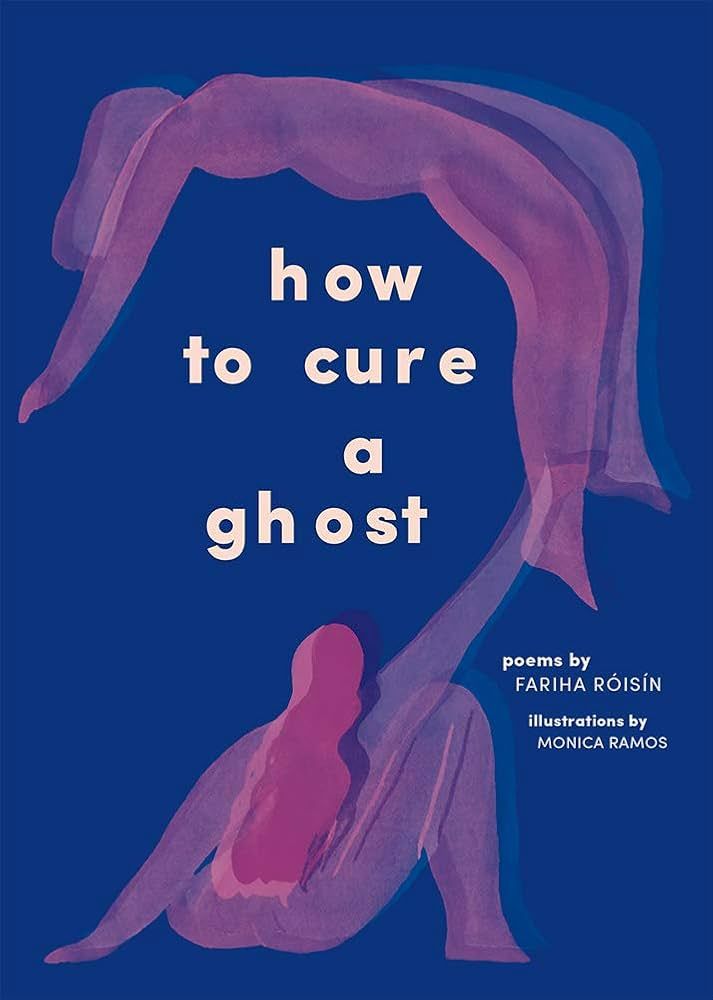
Cover of Fariha Róisín’s poetry book, How to Cure a Ghost

Fariha Róisín’s debut book of poetry, How to Cure a Ghost, is a classic example of how Walt Whitman’s free-spirited form of prose and Charles Bukowski’s unapologetic unconformity of lacking grammar, proper line breaks, and capitalized personal pronouns completely decimated what people consider “expressive” contemporary poetry these days.

Every poet, including myself, started out with a carefree heart, trying to spill our guts out on our digital canvasses, relishing in our creative use of  indents and epic-length run on sentences that must have mattered to someone, most likely a friend of the opposite sex, or a muse of sorts.

It’s clear Róisín is a beginning poet, sharing these same character traits in her writing, who undoubtedly is proud to have her work published and bound in a pretty nifty paperback

And what a book it is!

With vibrant use of pastel blue and pink it’s clear the aesthetics are meant to be flowery and spiritual, a psychological exploration of the obvious hurt and healing our now world famous poet has gone through. It’s all so calculated and poetry workshop approved, most likely led by untalented instructors who regurgitate the same eye-rolling and groan-inducing clichés that everyone else seems to cling to for life!

The rules are as follows;

1: To break the rules, you must know the rules!

2: Avoid clichés!

3: No rhyming!

The rules usually stop here by the way…

But can we be honest: Why is so much contemporary poetry written with awkward line breaks that read like William Shatner trying to sound dramatic as Captain Kirk on the original Star Trek series that aired during the late 1960s? Do these poets ever read aloud their employment of faux-dramatism and not want to crack up and laugh at how stupid their writing sounds? Are they even aware of this at all?

And if we’re being honest, do these poets even enjoy classical English poetry at all? Or is the past meant to be forgotten, and the present mere imitation of other workshop approved poets who employ all of the same supposed “tricks of the trade”?

I am hard to please as a reader and I owe much of my harshness to spiritual mentors such as film critic Pauline Kael, poet and art analyst Dan Schneider over at Cosmetica, and even Lucifer himself. Harsh, yes, but I am still kind hearted. Róisín has skill, and a creative expressiveness with the English language, but her themes of hurt and self identity are such a trope with female written poetry. Adventures aren’t just for boys, and these girls need one!

Yes, Whitman and Bukowski’s poetry was often driven by length and an upsetting lack of use of stanzas, but Whitman was also trying to capture the free-spiritedness of the Western frontier during the days leading up to the Civil War, while Bukowski was a drunken rebel.

Fariha Róisín, on the other hand, is a mere imitator trying to win the approval of talentless hacks who are proud to declare themselves poets, who often thrive off disingenous hagiography from other untalented hacks calling themselves “poets”. Her book is pretty, however, and thick! It feels important. It sounds important.

I’m just not sure if it’s any good…

The things we don’t talk about (poetry book, 2018?)

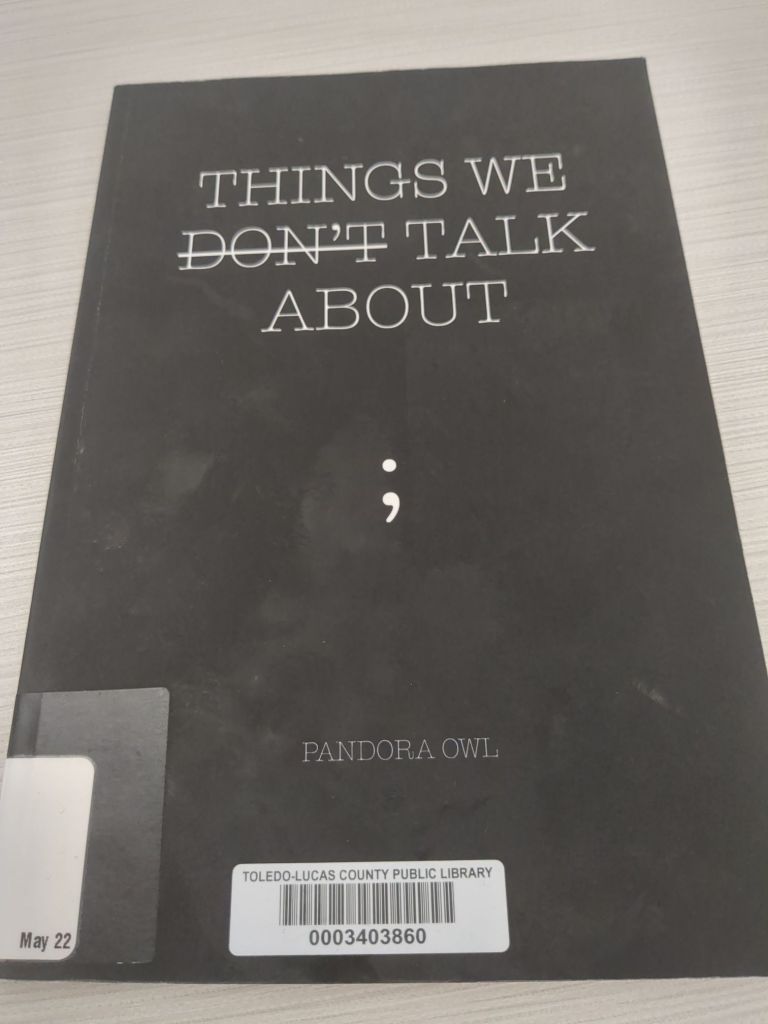
Library copy of this mysterious book

I don’t know who Pandora Owl is, I don’t know if they’re a boy or girl, I don’t know their age.

Looking for a new book of poetry to review at my main library in Toledo, I fingered upon this mysterious black chapbook tightly packed in between much bigger and important hardcover collections of poetry. Like a black monolith, I was surprised. We don’t get too many chapbooks in our library, but this one must have been important.

To say the poetry found inside is somewhat of a disappointment is hardly surprising. Most contemporary poetry has that initial reaction of forcing our eyes to roll, begging the question: “Is this all there is?”

Many independently published poets struggle with addictions and depression, perhaps even something more serious. I would know because I am one of them, but that’s pretty much standard for any creative person in the 21st century. To make meaningful art that conveys any hints of trauma or suspense, you must have moved through your own traumas and suspenseful episodes, unless you’re some angel born and raised in a suburb who has never seen the film Grease.

To say Pandora doesn’t have any emotions is a dishonest attempt to bury one’s objections to their sparse and often teenage-esque bars of suicide and pain, but there’s something sinister in these often one and two line poems, almost as if there is a liar with skill who is hiding behind their own black mask.

I don’t know if any of their poetry is actually good, or how it gained the attention of our city librarian, because we don’t have too many of these books. But grabbed their attention it did, and emotions it does convey.

Part of the allure of a contemporary chapbook is the alluring aesthetic of the wisdom to be found within. These books often have striking covers with a stock of paper that feels slick in one’s hands. These books feel important, and to some they are important, but to what end? Save for your rare Rupi Kaur or David Orr, poets don’t make money, and these books are often costs of love, hopefully sponsored by a loved one who wants to see their words immortalized.

And immortalized they are, though there’s hardly any metaphors to be found, and laughable attempts at the metaphysical, though plenty of thoughts on pain and depression, which sadly is so passé I almost want to call it a faux pas in the poetry realms of modern age.

But alas, Pandora Owl is published, and hurt they are, something I would never deny a person who has ever suffered some sort of crippling disease, those of psychiatric conditions included.

I’m just not sure what to make of these poems? Will they ever be read aloud in a classroom, or bound in some collection of greatest hits, or perhaps simply forgotten to the dust and fingerprints of time?

What about the WordPress poet like myself, whose words know only digital ink, their poetry’s fate at the hand of server operators and hosting fees?

I believe in resurrection, life after death, the ability to find what was once lost. I know spirit channelers can channel lost art in attempts to recreate it. But if everything gets lost in duration eventually, the question for the nihilist is to what end does even paying to be published justify?

My response is to know one simply existed, and to know the joy of having done something new, even if it appears to outsiders that nobody may care. But it’s clear Pandora Owl spoke to someone who does care about their emotions, and to that, I say is a compliment.

I don’t know if I would have purchased this book on my own if I had any clue what was inside. The book has no copyright claim or details about the author. They clearly want to remain anonymous of some sort. Perhaps that is what draws me to their allure. Featuring a solitary semicolon on the front cover I’m not even sure what the message is. That this book is an archaic form of grammar that modern English professors bitch about?

But I digress. I skimmed through these pages, reaffirmed what I felt about most contemporary poetry and its narcissistic trait to be about the author’s feelings and rarely someone else’s. I’m not a psychiatrist, but I do enjoy armchair psychology, and perhaps hiding in mystery is the best thought that can be summed up about this book.

I’m just exhausted, and sometimes I have to sigh and say I read too much poetry, because I have read this type of thoughts before. At least Rupi Kaur has pleasuring doodles and an overall intriguing aesthetic. David Orr has things to say and a command of form unparalleled by most contemporary writers. This book has mystery and a semicolon. I’m just not sure what I’m supposed to take away from that?

Crazy Clown Time (music video, 2012)

Diving into the horror of college frat parties and hedonistic college youth, David Lynch directs a tintilating nightmare in his 2012 music video: “Crazy Clown Time”.

The music, more hypnotic than enjoyable, serves as the screenplay for the visuals, with artist David Lynch’s lyrics being transcribed word for word on screen.

Part humorous, part baffling, it’s clear Lynch wanted all of his art to be taken seriously, even his smaller works.

I would be dishonest if I didn’t say that nobody does it quite like Lynch does, willing to let his subconscious guide his imagery where it happens to go….

All the Words I Kept Inside (book of poetry, 2024)

Image of a poetry book by P. J. Gudka

Simple, elegant, and yet very frustrating in the details that are left out rather than kept inside. Poet P. J. Gudka is clearly a follower of Sylvia Plath, a fellow poet who was unafraid to share her depression and all of its ugly heads it rears.

There’s hurt and loneliness in Gudka’s words, but what makes the book All The Words I Kept Inside so difficult is that the cause of these hurts are explored emotionally, but only at a distance. Like a surface level reading, there’s clearly trauma in our narrator’s life, a woman that wants to heal.

It’s like the image of nude girl, crouched and hugging her knees, trying to make her audience feel exactly what she is feeling, but still holding her body back for everyone to enjoy. In that pursuit, I would argue that Gudka is successful. There’s bravery in letting people read one’s thoughts on depression and suicide, but there’s also a certain dishonest attempt to hide why she feels this way, other than the usual parents not listening to their child, or lover feeling betrayed by another lover.

What Gudka needs is nouns, and specificity, and a willingness to share her darkest memories (in detail) to a friend or secret muse. Someone that can read her diary that she keeps locked in a drawer with more than just the emotion, but the actual subject of her paintings she should be trying to create. If Sylvia Plath is the inspiration for the emotion, then a poet like Sharon Olds is needed for the inspiration for explicitness.

If that sounds harsh, that’s because it is, but I’ve been to plenty of poetry workshops and heard much worse. If Eminem can handle a negative criticism, which he gets plenty of, then I am confident Gudka will survive my own mean words!

Silliness aside, I would recommend her book, which is available on Amazon. This is not a paid endorsement, nor am I personally involved in her work. I like discovering new poets and offering my opinions on them. How can we expect people to take our own writing seriously if we don’t take other’s seriously?

As far as the aesthetics for the book go, it has an elegant cover design and overall pleasing effect. There is a lot of blank spaces inside, however, and I had plenty of notes written inside my paperback copy of what I believe is the poet’s first book.

Big Girls Cry (music video, 2015)

Haunting.

Silence with use of sign language, the emotions a child is able to express, as if Sia’s own barren heart is being channeled thru her muse, a very young dancer named Maddie Ziegler.

Adult hands pierce thru the darkness, gripping the child.

Fear.

The little girl’s vulnerability on display. The audience sees just how child-like a mother’s heart is.

Themes of abuse.

The girl strokes her throat, signifying she’s drowning. Driven, she screams silently, crying out for someone to step in and do something.

Provocative.

A bold use of performance art, the audience, staring thru glass glowing screens, watch in horror, unable to do anything.

Drowning. Choked.

A strong gust blows thru her hair, a Sia wig reminding us, hopefully assuringly, how artificial this all is.

Chaos. Confusion.

The girl spins, almost like a scene from the movie Vertigo by film director Alfred Hitchcock. Her ears are stretched. Her vision obscured. The fingers stretch like cat whiskers or fish gills. The girl is lifted off camera, her feet dangling in struggle, suggesting she is being strangled by the invisible hands guiding her.

Abuse.

Big girls cry when their hearts break. Maddie now looks in awe, having survived the ordeal.

God is silent…

An analysis of “Sonnet 5”, by William Shakespeare

A crucial aspect of most of the 154 sonnets by William Shakespeare is the role of a central conceit, or metaphor, upon which the poem is constructed.

Surrounding the central concept is the building up of the thought surrounding the central conceit being construed, followed by a turn that often answers the question being posed, as if the poet answers their own dilemma presented.

The early sonnets of Shakespeare are of a devoted suitor to a fellow woman, perhaps the writer’s wife Anne Hathaway herself. Marked by an earnestness and sincerity that must have shocked insecure writers afraid to express their own emotion, it’s clear these sonnets were intended to reassure a faraway bride that no matter how long he was gone, his love remained for his wife. Not that the young playwright doesn’t share his own immaturity or confusion of how women find themselves beautiful, as evident about his thoughts of a woman wearing makeup in an earlier sonnet.

The idea of an immature man earnest in his desire was a trait cherished by the medieval Engles, one that was welcome and encouraged. It’s no secret Shakespeare was a bro of sorts, writing often for a male audience who would find his early immature thoughts about women witty and hilarious (this is perhaps best related in the ending of Two Gentlemen of Verona and the entire theme running through the play The Taming of the Shrew).

But behind the bro-ish attitude was a man who was honest and mature, unafraid to explore his devotion to a woman he had been married to by the early age of 18.

Sonnet 5 begins with the concept that the woman of his affection, who was once lovingly gazed at by other suitors, who will in time be treated by tyrants who no longer find her beautiful.

As suggested in the lines: “For never resting time leads summer on / To hideous winter and confounds him there,” the point being made is that as time goes on, the tyrants will turn on this woman, her withered age being on display like liquid in a glass vase, for all to see. However, with the turn, the narrator suggests her age will be rented for others to see, while his own taste of her flower shall remain just as sweet as it was before.

Through these early Sonnets, Shakespeare is building a consistent declaration of devotion to his wife, who was far away from London in their home in Avon. No matter how others will perceive Anne, his expression is that their relationship will endure throughout time, with William boldly declaring his love to remain just the same as when they were younger.

It’s this startling devotion of the young writer that sets him apart from contemporaries. Devoted and unafraid to declare the love for his wife while undoubtedly working far away, undoubtedly tempted by the entertainment of other women the city of London afforded, it’s quite clear Shakespeare was quite the confident husband.

Prose poetry in the mask of spirituality | A review of Reduced to Joy by Mark Nepo

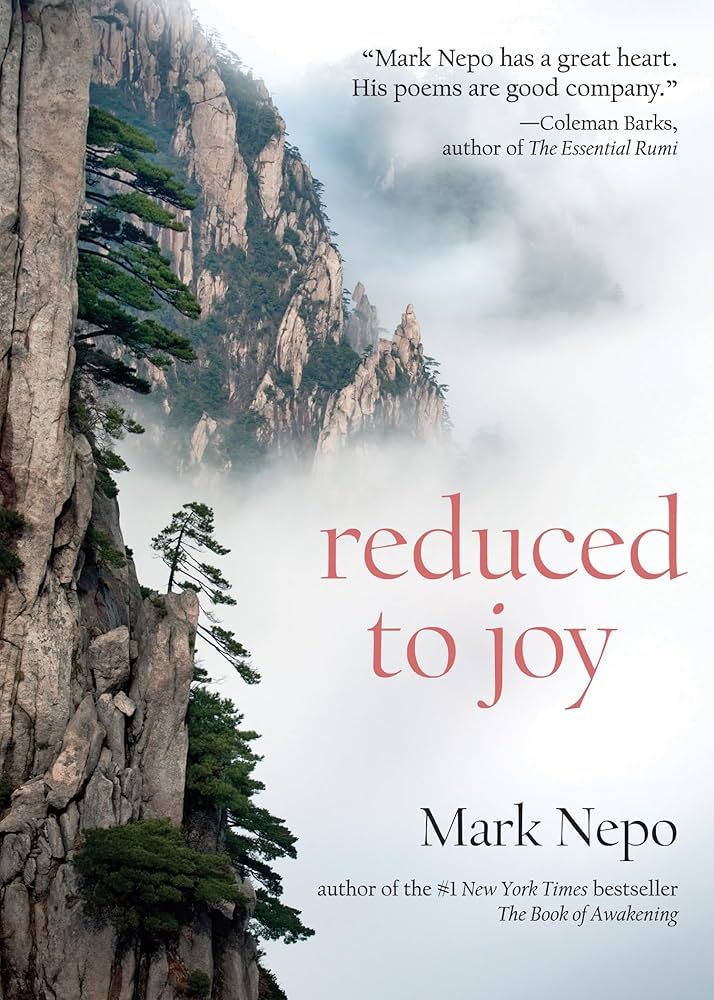
Cover of Mark Nepo’s 2013 Poetry Book: Reduced to Joy

Mark Nepo is good at reflecting on emotions and creating meaningful snippets of memories he’s clearly reflected on. Spirituality, perhaps even a hint of Buddhism, is found sprinkled throughout his book.

As a poet, maybe not so much.

Nepo makes the mistake most SERIOUS contemporary poetry make, which is that they write prose broken up with line breaks that they eyeball on a computer screen, thinking of not why line breaks exist in poetry to begin with, but rather how they can make their prose look like a poem.

Not that there’s anything wrong with this per se. There’s no hard rules in poetry and prose poetry is a thing but if broken prose is going to be considered poetry, I would go further and simply describe the English language as genuinely being poetic in all of its iambic expressions.

Yes, all languages have their natural cadences, and can be read as a song to some extent. Further to the point, not all poetry has to rhyme and most contemporary poetry doesn’t, to the point the very act is forbidden in poetry workshops and university courses.

To say I enjoyed Mark Nepo’s Reduced to Joy, a book of poetry published in 2013, isn’t a compliment meant to be take lightly. He is good at conveying emotion and describing his reflections.

But there comes a point where any one seriously interested in poetry as an art form or craft has to ask questions about discipline and consistency of form, a characteristic of study that Nepo seems to either reject or not have mastered at all.

Enjambment, while it can have its uses when employed selectively, is often an excuse for sloppiness, laziness, or as a way to supposedly create tension in broken prose as if the wording of the arbitrary line breaks are meant to be spoken dramatically. But if we’re being honest, this excuse for not practicing any control is stupid. Yes, there are poets like Charles Bukowski who used the practice of broken prose to create a sense of sloppiness or carelessness, but if that’s the case, Bukowski’s whole output as a writer was meant to be characterized by his figure as a drunkard and loose man, revolting against the conventional standards of his time. His sloppiness is his authenticity.

In Nepo’s case, he is merely doing what everyone else is told to do, and while I would argue he is better than most at what he does, there comes a point where the rejection of form becomes the necessitation of form to begin with.

It’s a snake that eats its own tail, an argument that gets eye rolls out of current poetry professors, and applause from actual aspiring poets with skill.

If sloppiness is the brush strokes Mark Nepo is trying to employ, much like a painter carelessly letting their emotions take over their abstract paintings, then so be it.

But I think the time has come for a return to form and justification of unwieldy enjambment if that is the case. If Mark Nepo is trying to argue that his emotionally charged poems are meant to be whip-like brush strokes of a painting then I would argue he is merely a prose writer afraid to write paragraphs that employ poetic use of cadences naturally occurring in the English language.

Iambic pentameter is a thing and Shakespeare often made poetic what was usually just pretty prose in his characters’ dialogue often utilized in his famous stageplays.

Mark Nepo, on the other hand, is a good poet and Reduced to Joy is filled with wonderful poetry. But in 2025, his style has become the very trope defining definition of a cliché.

Bring me back the classics and return to form. A little bit of discipline never hurt anyone.